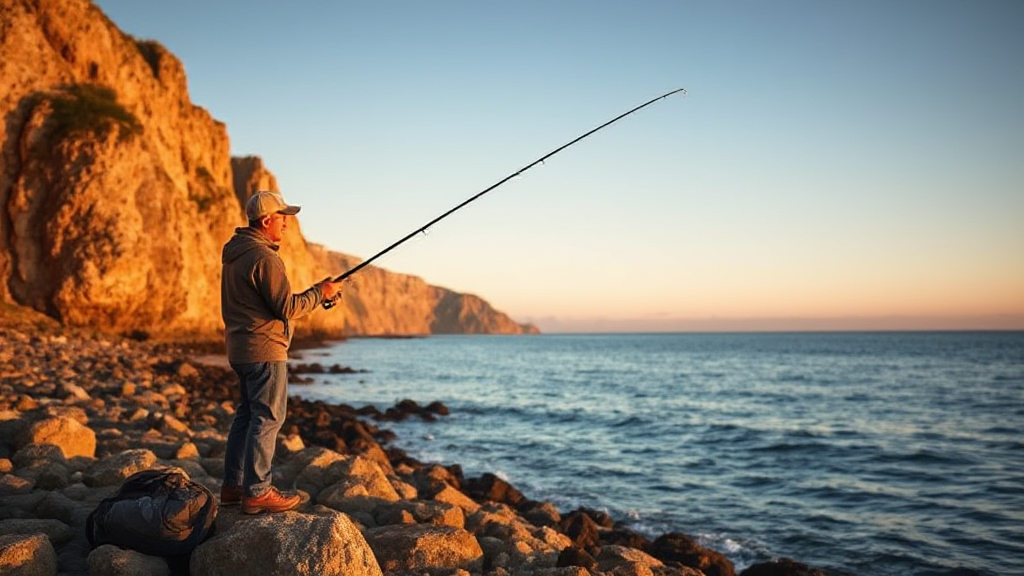
How to Start Fishing in Portugal the Right Way and Finish With a Valid Licence
By the end of this process you will have a valid DGRM recreational sea fishing licence for mainland Portugal, a clear idea of where to cast, and a simple routine that keeps you legal on every trip. That is the outcome, and it is closer than most visiting anglers expect. The most common question in every Portugal fishing forum is not about bait or rods. It is about paperwork. People want to know whether they need a licence, how to get one without a Portuguese tax number, and what happens if they simply turn up at the coast with a rod. The short answer is that you do need a licence for recreational sea fishing in mainland Portugal, and the fastest way to get one is to apply through an online service rather than wrestling with a government portal in a language you may not speak.
If you are planning your first trip, the practical route looks like this: decide where you will fish, sort your licence before you travel, pack gear that suits the Atlantic, and learn the local rules about size limits and protected species. Everything else, from choosing between the Algarve and the Silver Coast, is a matter of preference. This guide answers the repeat questions directly, in the order they usually come up, so you can move from curious to casting without wasting a day of your holiday.
Step One: Understand What Licence You Actually Need for Fishing in Portugal
Recreational sea fishing in mainland Portugal is administered by the DGRM, the national directorate responsible for marine resources. If you are fishing from the shore, from rocks, from a beach, or from a boat for leisure rather than profit, you fall into the recreational category and you need a licence. This applies to visitors as much as residents. The idea that tourists are exempt is one of the most persistent myths in fishing in portugal, and it causes real problems when a maritime authority officer asks to see your documentation on a busy Saturday morning.
There are a few distinctions worth knowing before you apply. Freshwater fishing in rivers and reservoirs is handled separately from sea fishing, with different rules and different bodies involved. If your trip is entirely coastal, you want the recreational sea fishing licence for mainland Portugal. Spearfishing, boat fishing and shore angling all sit under the same general licensing framework, though specific gear restrictions can vary. The Madeira and Azores archipelagos have their own regional arrangements, so if your itinerary includes island hopping, check each destination rather than assuming one licence covers everything.
The licence itself is personal and tied to your details. You do not need to be a Portuguese citizen, you do not need a residency card, and you do not need a Portuguese tax number to apply through a service designed for visitors. What you do need is accurate personal information, a valid payment method, and a few minutes of your time. That is genuinely the whole barrier. Anglers who expect a bureaucratic ordeal are usually surprised by how quickly the process resolves when they use the right channel.
Step Two: Apply Online Without a Government Portal Headache
The traditional route involves navigating a Portuguese government website, interpreting form fields in a foreign language, and hoping your payment goes through. It works, but it is slow and unforgiving if you make a mistake. A faster alternative is to use a dedicated application service that handles the form for you. The process takes about three minutes, requires no NIF or government portal login, and accepts card, Apple Pay or Google Pay. You fill in your details, pay, and receive confirmation that your fishing license application has been submitted correctly.
Here is the sequence, start to finish. First, gather your personal details exactly as they appear on your identification document. Spelling matters, because the licence is issued against your name. Second, open the application page on your phone or laptop. Third, enter your details into the form, checking each field before you move on. Fourth, choose your payment method and complete the transaction. Fifth, save the confirmation and any licence documentation to your phone so it is available offline, because coastal signal can be patchy.
Do this before you travel rather than on the morning you plan to fish. Applying in advance removes the risk of a payment hiccup or a slow connection derailing your plans. It also means you can start your first session the moment you reach the water instead of sitting in a café trying to sort out paperwork. If you are travelling with friends or family who also intend to fish, each person needs their own licence. There is no group or family licence that covers multiple anglers under one application.
Keep a digital copy and, if you can, a printed copy in your tackle bag. Officers may accept a screen, but a paper backup costs nothing and avoids any debate about a drained battery. The licence is not a physical permit you need to display on your person at all times, but you should be able to produce it on request without a lengthy search.
Step Three: Fish the Portuguese Coast With the Right Gear and Local Knowledge
Portugal’s Atlantic coastline is long, varied and genuinely excellent. The Algarve offers warm water, rocky headlands and sheltered beaches. The Alentejo coast is wilder, with fewer crowds and stronger winds. The Silver Coast north of Lisbon mixes surf beaches with estuary systems. Further north, around Porto and the Minho, you find cooler water and different species. This variety is why portugal fishing appeals to anglers from across Europe, and it is also why a single rigid approach does not work everywhere.
For shore angling, a rod in the three to four metre range paired with a fixed-spool reel loaded with braid or strong monofilament covers most situations. A shock leader protects against abrasion on rocks. Your terminal tackle should include a selection of hooks, swivels, weights and floats, plus a landing net if you intend to release fish carefully. Bait varies by target and season. Squid, prawns, ragworm, sandeel and mackerel strips all produce results, and local tackle shops are the best source of current advice on what is working that week.
Timing matters as much as gear. Dawn and dusk are reliably productive, and tidal movement drives feeding activity. On the Atlantic coast, the two hours either side of a tide change often outperform the middle of a tide. Wind direction affects both comfort and water clarity. An onshore blow can stir up sediment and shut down the bite, while a gentle offshore breeze can flatten the sea and improve visibility. Learn to read a simple tide table and a wind forecast before you commit to a mark.
Safety deserves more attention than it usually gets. Atlantic swells can arrive without warning on rocky platforms, and a wave that looks manageable from the car park can be dangerous at the water’s edge. Fish with a companion where possible, wear footwear with grip, and never turn your back on the sea. If a mark feels marginal, walk away and find another. No fish is worth an accident, and there is always another spot along the coast.
Respect the rules that protect the fishery. Minimum size limits apply to many species, and some are protected entirely at certain times of year. If you are unsure whether a fish is legal to keep, release it. Photograph it quickly, handle it with wet hands, and return it to the water without delay. This is not just good ethics; it is what keeps the fishing good for everyone who comes after you.
Step Four: Avoid the Mistakes That Catch Visitors Out
The first mistake is assuming you can sort the licence later. You cannot, not without risking a fine or an uncomfortable conversation with an officer. Sort it before you fish. The second mistake is applying for the wrong licence. Freshwater and sea fishing are separate, and island regions have their own systems. Read the description carefully and choose the option that matches your actual plans.
The third mistake is entering your name incorrectly. A licence issued under a misspelled name may not match your identification, which creates exactly the kind of problem you were trying to avoid. Check every field twice. The fourth mistake is relying on a single payment method that may be blocked abroad. Using a service that accepts card, Apple Pay or Google Pay gives you options if one route fails.
The fifth mistake is ignoring local regulations because they seem minor. Size limits, closed seasons and protected species rules exist for good reasons and are enforced. The sixth mistake is fishing without telling anyone where you are going, particularly on remote stretches of coast. A quick message to someone at your accommodation costs nothing and matters enormously if something goes wrong. The seventh mistake is overpacking. You do not need every lure you own. A focused selection of proven tackle will catch more fish than a chaotic box of options you never use.
Finally, do not treat the licence as the finish line. It is the entry ticket. The real work is learning the water in front of you, which takes time and attention. Talk to local anglers, visit tackle shops, watch how the regulars fish a mark, and adjust. The Portuguese coast rewards patience and curiosity far more than expensive gear.
Frequently Asked Questions About Fishing in Portugal
Do I need a licence to fish from the shore in mainland Portugal?
Yes. Recreational sea fishing from the shore, rocks, beaches or a boat in mainland Portugal requires a licence issued under the DGRM framework. This applies to visitors as well as residents, and there is no tourist exemption. Apply before you travel so you can start fishing immediately on arrival.
Can I get a licence without a Portuguese tax number?
Yes. You do not need a NIF or a government portal login when you apply through an online application service. You provide your personal details, pay with card, Apple Pay or Google Pay, and receive confirmation. The process takes around three minutes and is designed for visitors who are not resident in Portugal.
Does one licence cover freshwater and sea fishing?
No. Freshwater fishing in rivers and reservoirs is administered separately from recreational sea fishing, with different rules and authorities. If you plan to fish both, you need the appropriate authorisation for each. The Madeira and Azores archipelagos also have their own regional arrangements.
What happens if I am asked to show my licence while fishing?
You should be able to produce it on request. Keep a digital copy on your phone and a printed copy in your tackle bag as backup. Coastal signal can be unreliable, so an offline copy avoids any awkwardness. If your details are correct and your licence is valid, the check is straightforward.
Is the licence expensive or difficult to obtain?
It is neither. The cost is modest, and the application is simple when you use a service built for the purpose. The main thing is to do it in advance rather than at the last minute. Once it is sorted, you can focus entirely on the fishing, which is what you came for.