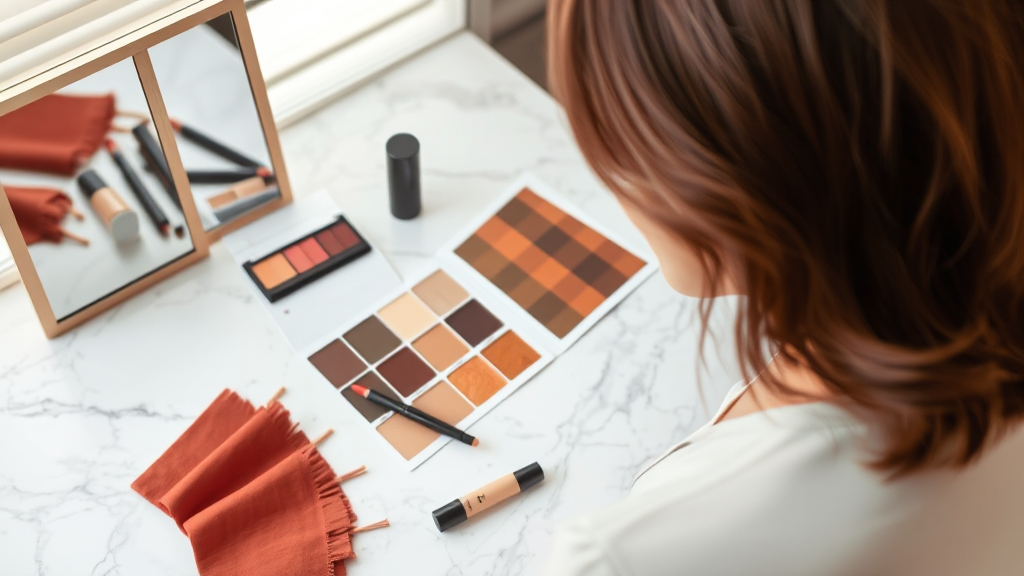
The Power of a Color Palette: How to Build One That Flatters Your Skin Tone
Your color palette is more than a collection of pretty shades—it’s a personal style tool that can transform the way you look and feel. When you wear colors that harmonize with your natural undertones, your skin appears brighter, your eyes look clearer, and your overall presence feels more polished. But how do you discover which hues truly work for you? This article explores the art and science of color palettes, offering practical steps to curate a wardrobe and beauty routine that celebrates your unique coloring.
Understanding Undertones: The Foundation of Your Color Palette
Before you can build a flattering color palette, you need to understand your skin’s undertone—the subtle hue beneath the surface. Undertones generally fall into three categories: warm, cool, and neutral. Warm undertones have a golden, peachy, or yellow cast, while cool undertones lean pink, red, or blue. Neutral undertones are a mix of both, making them versatile with most colors.
A simple way to identify your undertone is the vein test: look at the veins on your wrist in natural light. If they appear greenish, you likely have warm undertones; if they look blue or purple, you’re probably cool. Unsure? The jewelry test can help too—silver typically flatters cool undertones, while gold enhances warm ones. Once you know your undertone, you can start selecting colors that enhance rather than wash you out.
However, undertone is just one piece of the puzzle. Your hair color, eye color, and even the depth of your skin (fair, medium, deep) influence which shades within a color family look best. That’s why many people turn to ways to find your best colors that go beyond basic rules, such as seasonal color analysis.
The Seasonal Color Analysis Approach
Seasonal color analysis is a popular method that categorizes individuals into four main groups: Spring, Summer, Autumn, and Winter. Each season has a specific set of colors that harmonize with particular undertones and contrast levels. Spring palettes feature warm, bright, and light colors like peach, coral, and golden yellow. Summer palettes are cool, soft, and muted—think dusty rose, lavender, and powder blue. Autumn embraces rich, warm earth tones like olive, rust, and mustard, while Winter favors cool, vivid shades such as royal blue, emerald, and pure white.
This system helps you narrow down your ideal palette by considering not just undertone but also the intensity of your features. For instance, someone with high contrast (dark hair and light skin) might be a Winter, while a person with low contrast (light hair and light skin) could be a Summer. The BeautyLiesTruth color guide offers a more personalized twist on this method, using interactive quizzes to help you pinpoint your season and the shades that make you glow.
How to Build Your Personal Color Palette
Once you have a sense of your season or undertone, you can start building a palette that works for your lifestyle. Begin by pulling inspiration from your existing wardrobe—which colors do you gravitate toward and receive compliments in? Those are clues. Then, create a list of “core” neutrals that serve as your base, such as navy, beige, or charcoal, and a set of “accent” colors that add personality, like teal or blush.
Consider the 60-30-10 rule often used in interior design: 60% of your outfit can be a neutral base, 30% a secondary color, and 10% a bold accent. This ratio helps you incorporate your palette without feeling monotonous. For example, if you’re a warm Autumn, you might wear a camel coat (base), an olive sweater (secondary), and a rust scarf (accent).
Don’t forget that your color palette extends to makeup and hair. A foundation with the right undertone will blend seamlessly, while lipsticks in shades from your palette can brighten your smile. Even your nail polish can be chosen to complement your skin’s undertone. The goal is to create a cohesive look that feels authentically you.
Common Mistakes When Choosing Colors
Many people fall into the trap of following trends rather than their natural palette. While it’s fun to experiment, wearing a trendy shade that clashes with your undertone can leave you looking tired or sallow. Another common mistake is focusing only on the color itself, ignoring its saturation and brightness. A muted version of a color might suit you better than a neon one, even if they share the same hue.
Also, beware of the “black and white” assumption—that everyone looks good in these basics. While they are versatile, pure white can be harsh on warm skin, and black can overwhelm lighter features. Instead, try off-white or charcoal as gentler alternatives. Finally, don’t neglect the power of draping. Hold colors next to your face to see how they affect your complexion; if a shade makes your skin look dull, it’s probably not in your ideal palette.
Using Online Tools to Discover Your Palette
If you’re unsure where to start, online tools can offer a helping hand. Many beauty websites provide quizzes that analyze your features and suggest a personalized palette. For instance, the find your best colors resource on BeautyLiesTruth uses a series of questions about your hair, eyes, and skin to generate a custom color report. These tools are especially useful for beginners because they remove the guesswork and provide a clear starting point.
However, remember that no quiz is 100% definitive. Use the results as a guide, but trust your own eyes and instincts. You might find that a color outside your suggested palette still makes you feel amazing—and that’s perfectly fine. The ultimate goal is to feel confident in what you wear.
Frequently Asked Questions About Color Palettes
What is the difference between a color palette and a color scheme?
A color palette is a specific set of colors chosen for a particular purpose, such as a wardrobe or a brand. A color scheme refers to the combination of colors used in a design or outfit, often following a rule like complementary or analogous. Your personal color palette is a curated collection of shades that flatter you, while a color scheme can be any combination you put together.
Can my color palette change over time?
Yes, your palette can evolve as you age, with changes in hair color, or even with the seasons. For example, as you go gray, your undertones may become more noticeable, and colors that once worked might need adjustment. It’s a good idea to reassess your palette every few years or after significant changes to your appearance.
How many colors should be in a personal color palette?
There’s no strict number, but a practical palette often includes 10-15 colors: 3-5 neutrals, 5-7 accents, and a few wildcards for special occasions. This gives you enough variety to mix and match while keeping your choices cohesive.
Do I need to match all my clothes to my palette?
Not necessarily. Your palette is a guideline, not a rulebook. It’s okay to wear a color outside your palette if you love it—just pair it with a more flattering shade to balance the look. The goal is to have a foundation of colors that work for you, not to restrict your creativity.
Building a personal color palette is a journey of self-discovery. By understanding your undertones, exploring seasonal analysis, and using helpful tools, you can curate a collection of colors that enhance your natural beauty. Whether you’re refreshing your wardrobe or planning your next salon visit, let your palette be a reflection of your unique style—and remember, the best color is the one that makes you feel radiant.
Readers who are interested in this topic will benefit from exploring multiple perspectives and understanding the nuanced approaches that industry leaders recommend. Taking time to research thoroughly ensures better outcomes and more informed decision-making.
Those looking to gain deeper knowledge in this area should consider following expert analysis, staying updated with the latest developments, and engaging with professional communities where these topics are discussed in detail.
A comprehensive understanding of this subject requires looking at both theoretical foundations and practical applications. By combining study with hands-on experience, learners can develop a well-rounded perspective that serves them well in real-world scenarios.
As the landscape continues to shift and evolve, staying informed about emerging trends and best practices becomes increasingly valuable. This ensures you remain competitive and capable of adapting to new challenges as they arise.